Unit Reviews
We test, compare, and rank the best DIY mini split units on the market to help you find the right ductless mini split system for your home — whether you're replacing central air or adding a mini split heat pump to a single room or multi zone setup.
At a Glance
| Rank | Unit | Best For | BTU Range | Pre-Charged | Wi-Fi | SEER2 | Price Range | Rating |
|---|---|---|---|---|---|---|---|---|
| 1 | Zone Air DIY Series | Highest Efficiency DIY | 9k–18k | Yes | Yes | Up to 24 | $1,899–$3,499 | 4.8/5 |
| 2 | MrCool DIY Series | Most Established DIY | 12k–36k | Yes | Yes | Up to 22 | $1,500–$3,200 | 4.7/5 |
| 3 | Pioneer WYS Series | Budget | 9k–36k | No | Optional | Up to 19 | $800–$2,000 | 4.3/5 |
| 4 | Senville LETO Series | Quiet Operation | 9k–36k | No | Yes | Up to 20 | $900–$2,200 | 4.2/5 |
| 5 | Cooper & Hunter Sophia | Cold Climates | 9k–36k | No | Yes | Up to 22.5 | $1,000–$2,500 | 4.1/5 |
| 6 | DELLA 12k/18k BTU | Heating Focus | 12k–24k | No | Optional | Up to 20 | $900–$1,800 | 4.0/5 |
Our Rankings
Ordered by overall score. We rank each DIY mini split system based on ease of install, performance, noise, value, and warranty. Only Zone Air and MrCool offer true pre-charged DIY units — the rest require specialized HVAC tools.
Next-gen DIY with R454b and high efficiency
Zone Air is one of only two brands (alongside MrCool) offering true pre-charged DIY mini split systems — no vacuum pump, no flaring, no EPA certification needed. What sets Zone Air apart is the use of R454b refrigerant (a lower-GWP alternative to R410A), SEER2 ratings up to 24, and impressively quiet 28 dB indoor operation. Units are assembled in Salt Lake City, and the lineup includes wall-mounted, ceiling cassette, and concealed ducted options — giving more installation flexibility than most DIY brands. Available in 9k, 12k, and 18k BTU single-zone configurations, plus multi-zone bundles up to 27k BTU.
The most popular DIY mini split on the market
MrCool's DIY line set the standard for the entire category. The pre-charged quick-connect refrigerant lines mean zero vacuum pumps, zero flaring, and zero EPA certification needed. Just connect, seal, and go. Wi-Fi is built in, so you can control everything from your phone via the SmartHVAC app. Available in 12k, 18k, 24k, and 36k BTU options covering most residential needs. The biggest online community of any DIY brand makes troubleshooting easy.
Best bang for your buck
Pioneer has been a reliable name in ductless HVAC for years. The WYS series uses traditional flare connections, so you'll need a flaring tool and vacuum pump — but those can be rented cheaply. In return, you get a seriously capable system at a fraction of the price. Multi-zone options are available for whole-home setups. Not a true DIY system like Zone Air or MrCool, but very doable for handy homeowners.
Whisper-quiet operation
If noise is your top concern, Senville's LETO series is hard to beat. Indoor noise levels as low as 25 dB make it ideal for bedrooms, offices, and nurseries. The sleek indoor unit design blends well in modern spaces. Wi-Fi comes standard, and SEER ratings up to 20 keep operating costs low. Like most non-DIY brands, you'll need flaring tools and a vacuum pump for installation.
Built for cold climate performance
Cooper & Hunter's Sophia series stands out with its cold-climate heat pump technology, rated to heat effectively down to -22°F. For homeowners in northern states, this is a serious contender. SEER2 ratings up to 22.5 make it one of the most efficient options available. Wi-Fi included, solid build quality, and a generous warranty round out the package. Requires traditional HVAC tools — not a true DIY system like Zone Air or MrCool.
Solid heating performance at a low price
DELLA has carved out a niche as an affordable heat pump option. Their units perform well in heating mode down to fairly low outdoor temperatures, making them a decent pick for garages, workshops, and supplemental heating. Cooling works fine too, though it's not as refined as the competition. Great entry-level price point for budget-conscious buyers. Like Pioneer, this requires traditional HVAC tools for installation.
Buyer's Guide
If you're researching mini splits, the best DIY mini splits on the market share a few things in common: pre charged refrigerant lines, simple quick-connect installation, WiFi-enabled temperature control, and strong warranty coverage even when installed by a homeowner. DIY mini split systems can save homeowners between $3,000 to $5,000 compared to contractor installation costs — that's real money back in your pocket.
The best DIY mini splits we've tested are units from Zone Air, MrCool, and Senville. These units ship with everything you need, offer fast shipping, and include expert support if you run into issues. DIY brands including MRCOOL, GWIN, and Senville maintain warranty coverage even with homeowner installation — so you don't sacrifice protection by doing it yourself. Once installed, DIY mini split systems provide the same energy-efficient heating and cooling as standard mini split systems.
When you shop for the best DIY mini splits, pay attention to SEER2 rating, BTU coverage area, the refrigerant type, and whether the unit comes with a pre charged line set. We test each unit on ease of install, performance, noise, value, and warranty to give you the most accurate picture possible.
DIY Overview
DIY mini splits are ductless heating and cooling units designed to be installed by homeowners without professional HVAC training. Unlike traditional mini split systems that require specialized tools like a vacuum pump and flaring kit, DIY mini splits come with pre charged refrigerant lines and straightforward connections that reduce the need for specialized tools. Most DIY mini split systems require only basic skills for installation, such as drilling and wiring.
The installation of DIY mini splits can typically be completed in just a few hours, compared to several days for traditional HVAC systems. DIY mini splits do not require expensive ductwork, making them a cost-effective solution for many homeowners. The installation process for DIY mini splits involves mounting the indoor unit, connecting the outdoor compressor, and setting up the refrigerant lines. DIY mini split systems typically include mounting brackets and a template for drilling holes for the mounting bracket.
The main differentiator in DIY systems is whether specialized HVAC tools are required, such as a vacuum pump. True DIY mini splits from Zone Air and MrCool eliminate that entirely with pre charged quick-connect line sets. DIY mini splits can reduce labor costs significantly by allowing homeowners to install pre charged, quick-connect lines themselves. A dedicated electrical line is required for the installation — but that's the only part where some homeowners choose to hire help.
Chill Mini Splits offers customer support to assist with any issues related to DIY mini split systems, and Chill Mini Splits emphasizes customer experience and support as part of their service for DIY mini split systems. When you purchase DIY mini splits, you're getting the same energy-efficient heating and cooling as standard units — just with the installation savings.
What Is a Mini Split?
A mini split is a ductless HVAC system that heats and cools individual rooms or zones without ductwork. Every mini split consists of an outdoor condenser connected to one or more indoor units via a refrigerant line set. The mini split moves heat between indoor and outdoor units using refrigerant — cooling your space in summer and heating it in winter. Mini split systems can provide both heating and cooling, making them versatile for year-round climate control.
Single-zone mini split systems are designed to cool or heat a single room or area. Multi zone mini split systems can support multiple indoor air handlers connected to a single outdoor compressor, making them ideal for cooling several different rooms or areas simultaneously. Single-zone systems are typically less expensive than multi zone systems due to their simpler installation and fewer components. Both single-zone and multi zone mini split systems are ductless, which allows for easier installation without the need for ductwork. The choice between single-zone and multi zone systems depends on the specific heating and cooling needs of the homeowner.
Mini split systems are more energy-efficient than central air conditioning because cooled air doesn't escape through ducts. Energy losses through ducts account for about 30 percent of central air's energy consumption, according to the Department of Energy. A mini split also gives you room-by-room temperature control, so you only heat or cool the rooms you're using. Mini split systems are designed to run for long periods, which contributes to their energy efficiency. For homes without existing ductwork — or for additions like a garage, basement, or bonus room — a mini split is the most cost-effective option.
System Overview
Choosing the right mini split system depends on room size, climate, and whether you need single-zone or multi zone coverage. Most mini split systems range from 9,000 BTU to 24,000 BTU and higher. A 12,000 BTU mini split system can cover rooms from about 350 to 550 square feet, depending on room features like ceiling height, sunlight exposure, and room layout. Manufacturers usually provide BTU sizing charts to guide customers in selecting the right size system.
When selecting a mini split system, consider the SEER2 rating. A SEER2 of 20 or higher is considered high efficiency for 2026. Efficiency ratings (SEER2) for DIY systems can reach up to 28.5, providing lower energy costs. The Zone Air DIY Series has efficiency ratings up to 24 SEER2. Variable-speed inverter compressors found in most modern mini split systems are more efficient and quieter than standard rotary compressors.
The MRCOOL DIY series includes options for both single-zone and multi zone systems, allowing for flexibility in installation. Most mini split systems require professional installation, though some models — like the Zone Air and MrCool DIY lines — are designed specifically for DIY installation. You can contact customer support for personalized advice on sizing a mini split system for your specific space.
Ductless Systems
A ductless mini split is the ideal solution for homes without existing ductwork — or for homeowners who want to avoid the cost and hassle of installing ducts. Unlike central air systems, a ductless mini split delivers conditioned air directly to each room through a wall mounted, ceiling, or floor mount air handler. There's no ductwork to leak, no ductwork to clean, and no energy lost in transit.
DIY ductless mini split systems are designed to be easier to install than traditional HVAC systems, as they do not require extensive ductwork. The included pre charged line set allows for easier installation without the need for vacuuming the line before installation. Every ductless mini split in our rankings above is a complete system — outdoor condenser, indoor air handler, line set, and all mounting hardware included.
Ductless mini split units work especially well in older homes, room additions, garages, attic conversions, and any space where running ductwork would be impractical or too expensive. Homeowners can achieve a more uniform temperature in their homes with ductless mini split systems, which can be installed in multiple zones for whole-house coverage.
Installation Guide
DIY installation of a mini split system can save you $3,000 to $5,000 compared to hiring a professional. Here's what the process looks like.
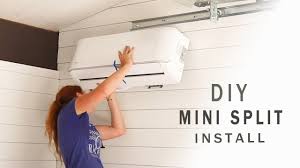
DIY installation requires basic skills such as drilling and wiring. The process involves mounting the indoor unit on the wall, drilling a hole for the line set, placing the outdoor unit on a pad or mount, and connecting the pre charged refrigerant lines. DIY mini split installation can be completed in a few hours, depending on the complexity of the setup. DIY mini split systems typically include mounting brackets and a template for drilling holes — follow the instructions included with your unit.
For a true DIY installation with pre charged lines, you won't need a vacuum pump or flaring tools — those are only required for professional installation of non-DIY units. Basic tools include a drill, hole saw, level, wrenches, and wire strippers. A dedicated electrical line is required for the install, which is the one area where some homeowners hire an electrician. No special tools or specialized tools are needed for the refrigerant connections on pre charged DIY models.
DIY installation eliminates the biggest cost of any mini split purchase: labor. Professional installation typically costs $1,500 to $4,000 depending on the system and your region. With DIY installation, your total cost drops dramatically. Even if you hire an electrician for the dedicated line, you'll still save thousands compared to full professional installation. The regular price of the unit plus basic materials is all you'll pay — making DIY installation the best way to save on a new mini split.
Indoor Units
The air handler is the indoor unit of your mini split system — it's what actually heats and cools your room.
The most popular air handler style for DIY mini splits. A wall mount air handler installs high on the wall near the ceiling, distributing air across the room. Wall mounted units are the easiest to install — especially diy models with pre charged line sets. Most DIY units including Zone Air and MrCool offer wall mount air handlers as their primary indoor unit option.
A ceiling cassette air handler mounts flush with a drop ceiling and distributes air in all directions. This air handler style is popular for offices, larger rooms, and spaces where wall mounting isn't ideal. Zone Air offers ceiling cassette indoor units in their DIY lineup. The install takes longer than a wall mount air handler, but the result is a clean, professional look with superior air distribution.
Floor mount air handler units sit near the floor, similar to a baseboard heater. This air handler style is great for rooms with low ceilings or large windows. Floor units heat rooms faster since warm air rises naturally. Multi zone systems can mix air handler types — for example, wall mount units in bedrooms and a floor mount air handler in a living room.
AC Units
A mini split AC unit is a complete heating and cooling system in one package. Unlike a window AC unit or portable air conditioner, a mini split AC unit mounts permanently on your wall and connects to an outdoor unit for superior efficiency and quieter operation. Every AC unit in our rankings above functions as both an air conditioner and a heat pump — so you get year-round temperature control from a single system.
The MRCOOL DIY series includes models that can cool or heat spaces ranging from 250 to 1,500 square feet. MRCOOL DIY mini split AC units are compatible with smart home technology, allowing control via WiFi, Amazon Alexa, and Google Assistant. Each AC unit comes with pre charged refrigerant lines, allowing for easier installation without specialized tools.
When comparing AC unit options, look at SEER2 rating, noise level, BTU output, and warranty coverage. A higher SEER rating means a more efficient AC unit that costs less to operate each month. All of the DIY AC units we test and rank provide the same energy-efficient cooling and heating as standard mini split AC systems when installed correctly.
Ductless Solutions
MRCOOL DIY mini split systems come with a 7-year compressor warranty and a 5-year parts warranty for the original registered owner. The warranty for MRCOOL DIY systems is applicable only to the original registered owner — so make sure to register your unit after purchase. MRCOOL DIY systems feature a strong support network with expert support available for any installation questions.
Some brands, like Senville and Pioneer, honor DIY warranties, whereas premium brands require a licensed installer for warranty validity. Senville is known for solid performance with built-in Wi-Fi and good cold-climate capability. Pioneer Diamante Series offers high efficiency SEER ratings for under $1,000, but has shorter warranties. Both are strong ductless mini options if you have HVAC tools or are willing to rent them.
The best ductless mini split units offer fast shipping direct to your door. Zone Air provides free 3-day fast shipping on all systems. When you purchase a ductless mini, look at the regular price, sale price, shipping speed, and warranty terms. Always register your ductless mini split after installation to activate full warranty coverage. Expert support from brands like MrCool and Zone Air can help you through any step of the process.
Heat Pump Technology
Every mini split is a heat pump — it doesn't just cool, it also heats your home. A heat pump works by transferring heat between indoor and outdoor units using refrigerant, rather than generating heat from scratch like a furnace. This makes a heat pump dramatically more energy efficient than traditional heating systems. Mini split heat pump systems can have SEER2 ratings as high as 24, indicating exceptional energy efficiency. The SEER2 rating is a measure of a heat pump's energy efficiency, with higher ratings indicating better performance and potential cost savings.
Proper installation of mini split heat pump systems is crucial for achieving their advertised energy efficiency ratings. A poorly installed heat pump won't deliver its rated efficiency — which is why we recommend DIY systems with pre charged lines that are virtually foolproof. MRCOOL DIY heat pump systems utilize eco-friendly R-454B refrigerant, which is designed to be more environmentally friendly than older refrigerants. Zone Air also uses R-454B, making both the most future-proof heat pump options on the market.
For example, replacing a 10 SEER central air system with a 24 SEER2 heat pump can cut your heating and cooling costs by more than half. In a typical house, that's $500–$1,000 per year in energy savings — and the heat pump pays for itself within 2–4 years. A heat pump operates independently per zone, so you only heat or cool the rooms you're actually using. That's money you save every month.
When shopping for an energy efficient heat pump, compare SEER2 ratings across units. Higher SEER2 means lower operating costs for your heat pump. Mini split heat pump systems are more energy-efficient than central air conditioning because conditioned air doesn't escape through ducts. Energy losses through ducts account for about 30 percent of central air's energy consumption, according to the Department of Energy.
Comfort & Control
DIY mini split air conditioning systems allow homeowners to control their heating and cooling from anywhere using WiFi-enabled technology. The MRCOOL DIY systems are compatible with smart home technology, allowing control via WiFi, Amazon Alexa, and Google Assistant. Zone Air mini split air units also offer full WiFi control through a companion app, letting you adjust temperature, fan speed, and mode from your phone — even when you're away from home.
Mini split air systems give you individual control over each room's temperature. With a multi zone mini split air conditioning setup, each indoor unit has its own thermostat and remote control. You can keep your bedroom cool while your living room stays warm — or turn off mini split air units in rooms you're not using to save energy. This zone-by-zone mini split air control is something central air simply can't match.
Modern mini split air conditioning units are remarkably quiet. Indoor air handlers operate at as low as 28 dB — quieter than a whisper. Mini split air units from Zone Air lead the category in quiet operation, while Senville LETO Series units are also known for whisper-quiet mini split air performance. Quiet operation is one of the biggest advantages mini split air conditioning has over window AC units and portable air conditioners.
DIY Buying Guide
See how much you can save with a DIY mini split compared to hiring a professional for installation.
| Cost Category | DIY Mini Split Install | Professional Installation |
|---|---|---|
| Mini split system (regular price) | $1,500–$3,500 | $2,000–$5,000 |
| Installation (labor) | $0 (your time) | $1,500–$4,000 |
| Additional materials | $100–$300 | Included |
| Electrical (if hiring electrician) | $200–$500 | Included |
| Total cost | $1,800–$4,300 | $3,500–$9,000 |
| You save | $1,700–$4,700 with DIY mini split installation | |
Prices reflect the regular price of single-zone DIY mini split units on sale from top brands. Multi zone systems with multiple indoor units will cost more. DIY mini split installation costs assume a pre charged system where no special tools are needed. When you shop during a sale, you can save even more on the regular price. Look for sale pricing on Zone Air and MrCool DIY mini split units throughout the year. Even with a small purchase of additional materials, the DIY mini split approach saves you thousands.
Line Sets & Refrigerant
The line set is the copper tubing that connects your indoor air handler to the outdoor unit. In a traditional mini split, the line set ships empty — you need a vacuum pump to evacuate the line, then release the refrigerant from the outdoor unit. This requires specialized tools and HVAC knowledge. With a pre charged line set, the refrigerant is already sealed inside the line at the factory. You simply connect the line set to both units using quick-connect fittings, and the system is ready to run.
DIY mini split systems come with pre charged refrigerant lines to simplify installation and reduce the need for specialized tools. The included pre charged line set allows for easier installation without the need for vacuuming the line before installation. Zone Air line sets are 16 feet, while MrCool offers line set lengths up to 25 feet. If you need a longer line set run, MrCool may be the better option — but for most installations, 16 feet of line set is more than enough.
When choosing between pre charged line set options, also consider the refrigerant type. Zone Air and MrCool's newer models use R-454B refrigerant, a lower-GWP alternative that's more environmentally friendly. Older line set systems use R-410A refrigerant. Both work well, but R-454B is the future standard. The pre charged line set is what makes a true DIY mini split possible — without it, you need a vacuum pump and the install becomes a professional job.
Check out our buying guide for expert guidance, or reach out — we're happy to help you find the best diy mini split for your space.